On September 26, the third “Shanghai Architectural Heritage Protection and Utilization Demonstration Project Selection and Promotion List” sponsored by the Shanghai Trade Association of Cultural Relics Protection under the guidance of the Shanghai Municipal Administration of Cultural Heritage was officially announced. Among them, the protection and repair projects of the Marble Mansion of CWI Children’s Palace and the Shanghai Federation of Literary and Art Circles Office Building in Jing’an District have been selected as Shanghai Demonstration Cases of Building Preservation. Longhua Pagoda, McBain Building (Asia Building), the Former Residence of Martyr Li Bai, Hongqiao Old Mansion, Shanghai Tianchan Yifu Theater, Gongyifang Community, Guyi Garden, and Sacred Heart Hospital were also on the list.
Covering nationally listed buildings, municipal listed buildings, district-listed buildings, district cultural relic protection sites and outstanding historical buildings, the projects can to some extent reflect the current achievement of the city’s cultural relic protection work. They display the characteristics of “using science and technology to empower the protection of cultural relics, revitalizing and utilizing them for sharing by all people”, which can be regarded as a brilliant summary of the high-quality development of Shanghai’s cultural relic industry in the past decade.
Marble Mansion of CWI Children’s Palace
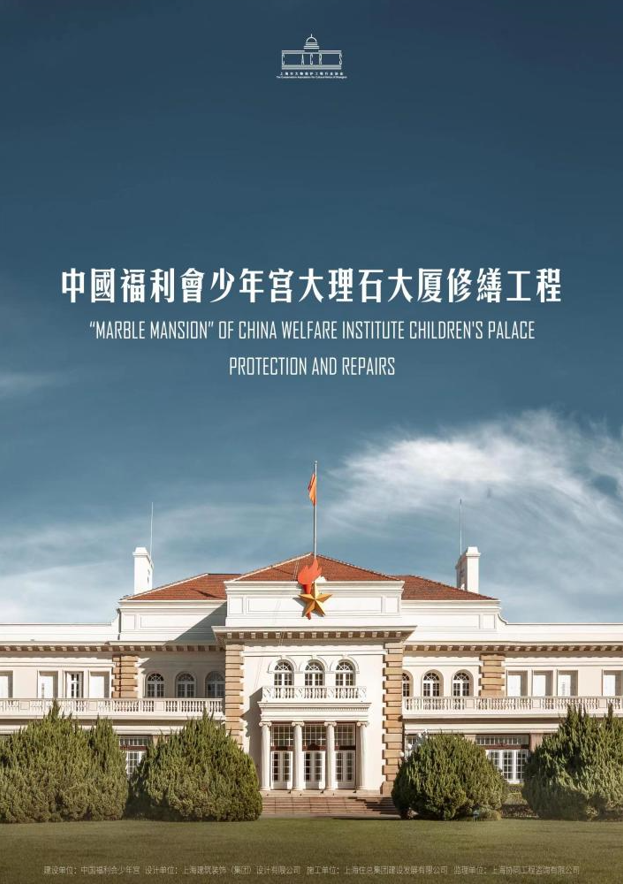
The promotion activity was held in the Youth Hall of the Marble Mansion of CWI Children’s Palace, which had just completed repairs. Located at No.64, West Yan’an Road, the Marble Mansion of CWI Children’s Palace is a century-old historical building with a similar architectural style to the Louvre in Paris. For many Shanghainese, the Mansion was a sacred place in their childhood.
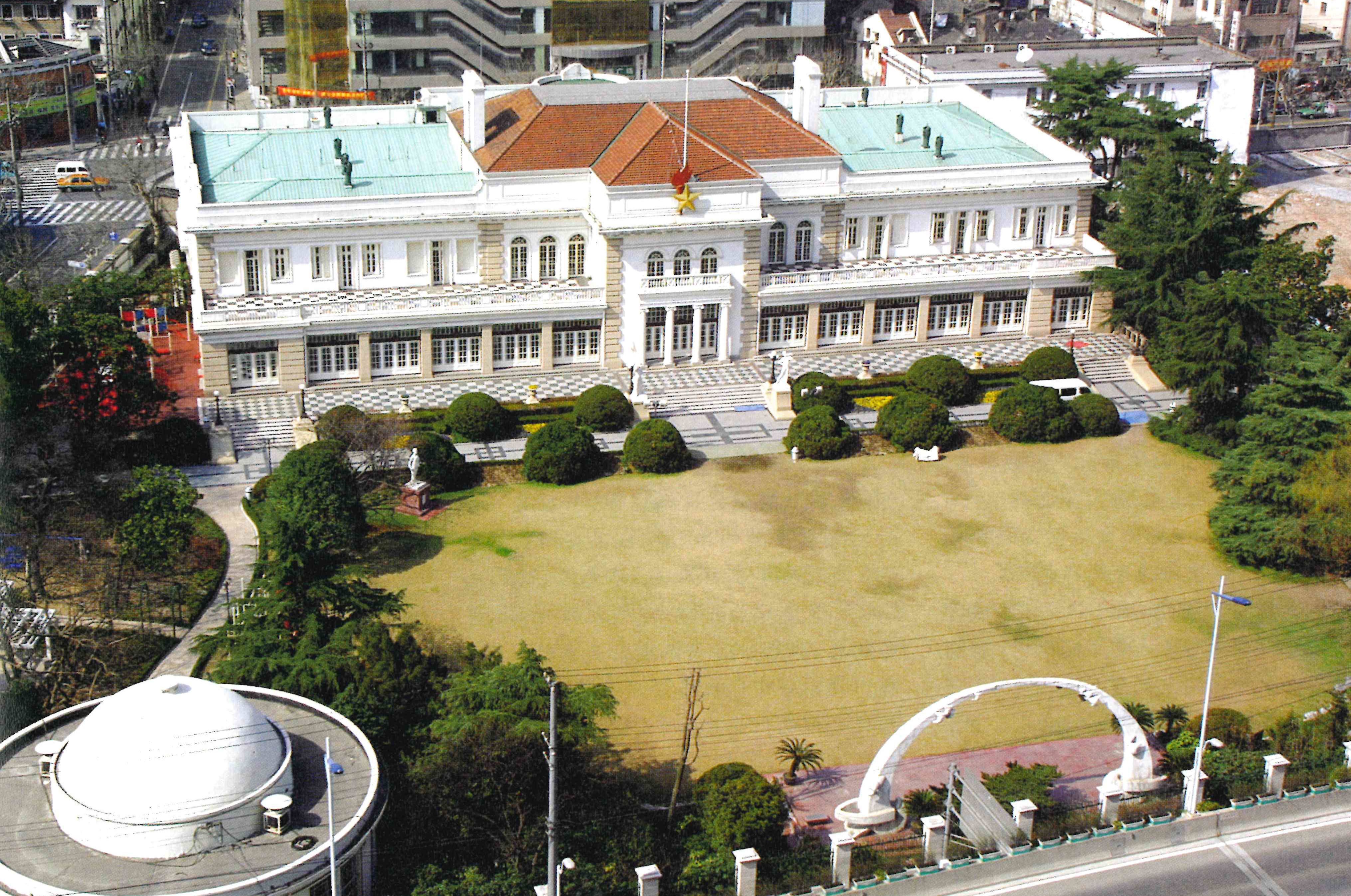
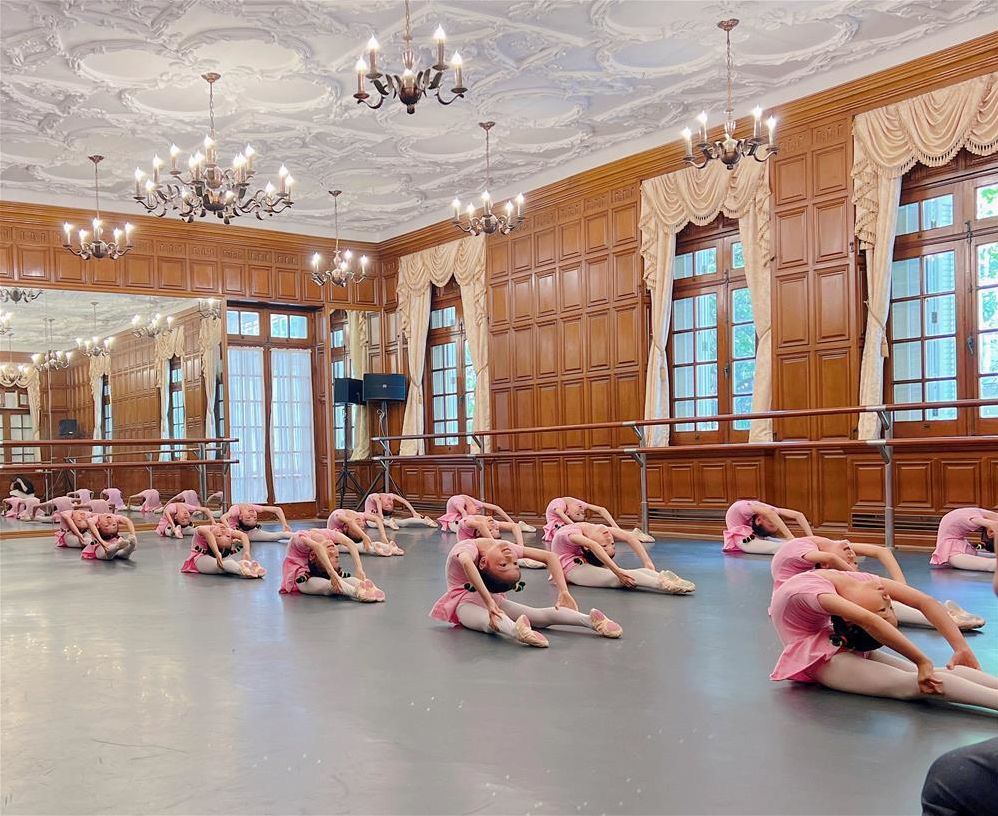
From the 1920s to the 1940s, the building was originally the private residence of Ellis Kadoorie, a wealthy British Jewish merchant. The Kadoorie Mansion became known as the “Marble Mansion” at home and abroad because it used a large quantity of marble imported from Italy as the building material.
On June 1, 1953, Song Qingling officially founded the earliest Children’s Palace in China, CWI Children’s Palace, and the Marble Mansion became its symbol.
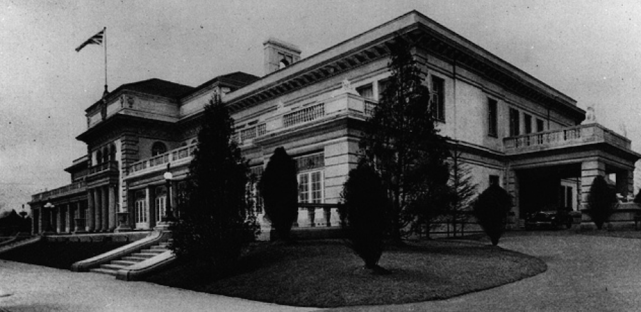
Photo: Historical photo of the original Kadoorie residence (Marble Mansion) just after its completion
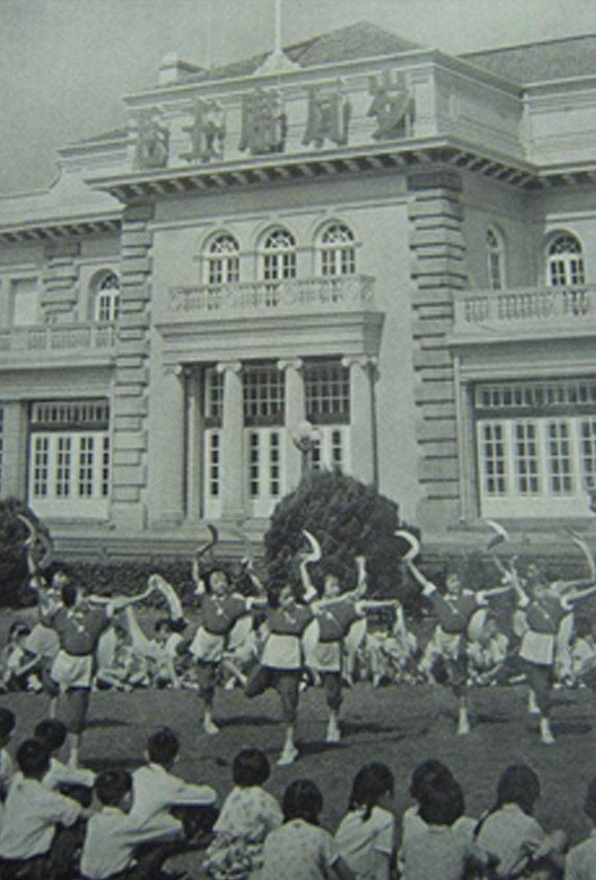
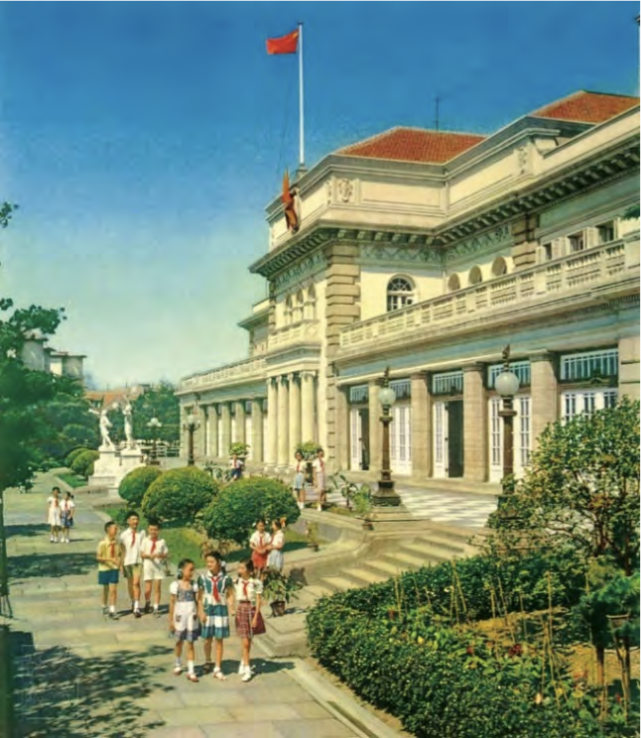
Photo: Old photo of CWI Children’s Palace
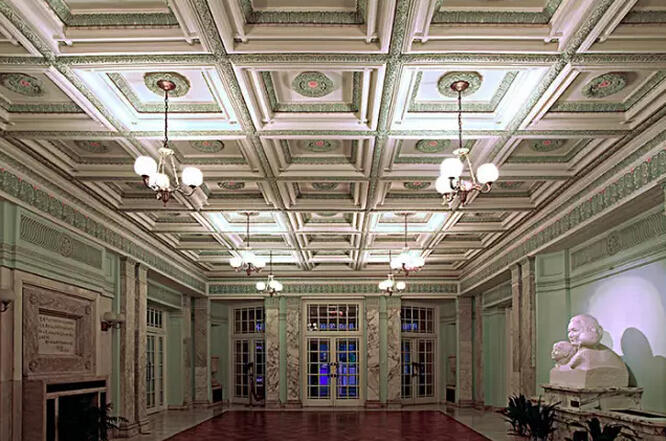
Decorated in the style of 18th-century European palaces, the pure white building radiates magnificence. Its lintel is exquisitely carved and painted with bronze patterns, the interior walls are mostly decorated with gold foil, and the ceilings are adorned with plaster patterns of different colors and shapes. The marble stairs have teak handrails and copper railings, while the marble floor is inlaid with willow and teak patterns. The four walls of the first-floor hall are also carved with marble, with eight chandeliers hanging on the top, filling the room with brightness.
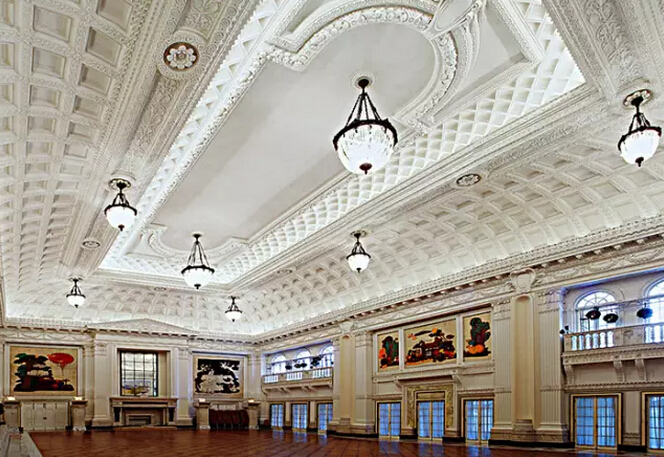
The two-floor building has a ballroom, a dining room, reception rooms, lounges, entertainment rooms, and bedrooms. Crystal chandeliers hang from the dome of the hall, and the interior is extensively decorated with gold foil, rendering a magnificent visual effect.
Modeled on Baroque-style European palaces, the mansion enjoys a luxurious interior decoration. It is now well-preserved with the original layout.
The project is said to have organically combined traditional repair techniques with modern science and technology to comprehensively renovate the roof, façade, and interior of the building. High-tech equipment such as 3D laser scanners and UAVs has been utilized to comprehensively collect building data, and endoscopes were used to ascertain the damage to the protective components and internal structures, thus providing a solid scientific basis for repair.
Meanwhile, traditional techniques including painting, gilding, and artificial stone manufacturing have been used in key protected parts to preserve the historical style of the century-old building. The aim is to deliver the building to teenagers in a healthier, more complete and more genuine manner. Such was the instruction of Ms. Song Qingling: “Give the most precious things to children.”
Shanghai Federation of Literary and Art Circles Office Building
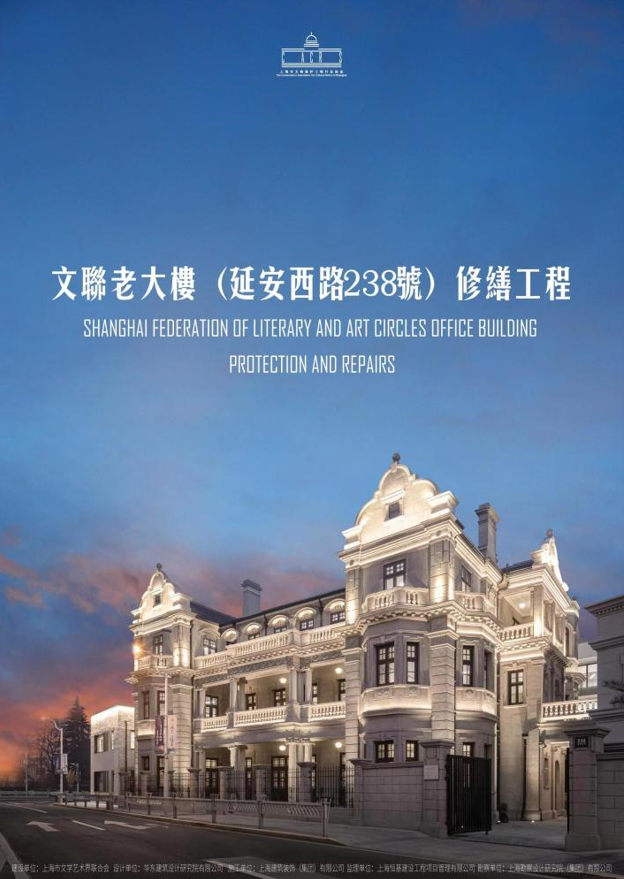
Located at No. 238, Yan’an West Road, Jing’an District, the “Shanghai Federation of Literary and Art Circles Office Building” (hereinafter referred to as the “Office Building”) is well-known to Shanghai’s literary and art circles. It was originally a garden residence built in the mid-1920s. In 1950, the Shanghai Municipal People’s Government allocated it to the Shanghai Federation of Literary and Art Circles for use. It has served as the federation’s office building since then. In 1994, the building was included in the second list of outstanding historical buildings in Shanghai.
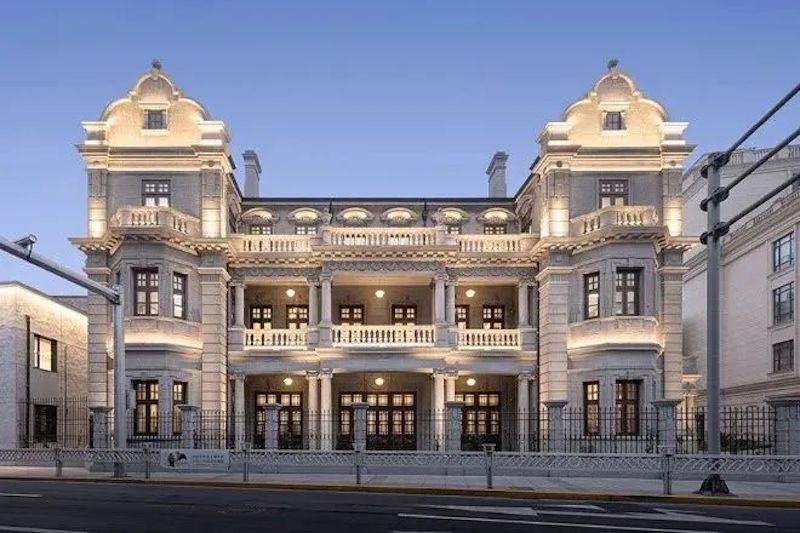
The architecture has a brick-wood composite structure, with three floors in the main building. Its exterior walls are decorated with grayish-white granite plaster, and the roof is covered with red flat tiles. The outer corridor in the middle of the architecture is decorated with Ionic columns, which are regular in proportion and exquisite in detail. In general, the decorations display characteristics of the Italian Renaissance and the Baroque style.
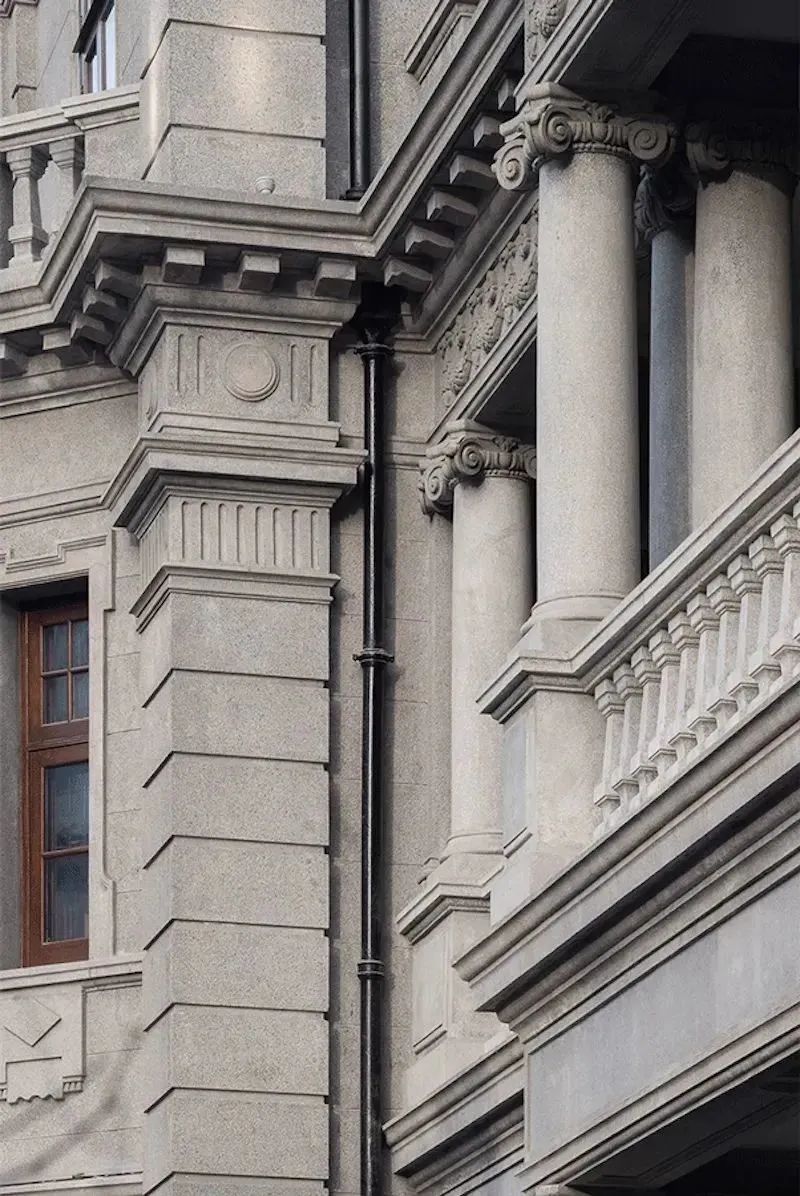
Photo: Details of a facade of the main building; the outer corridor in the middle of the architecture is decorated with Ionic columns.
The interior abounds with exquisite details. For example, the wood decorative surfaces on the first floor of the residence are all made of teak, the best furniture timber at that time, while lauan is used on the second and third floors. The wooden floors in each room are paved in different patterns, with intricate designs along the fringes.
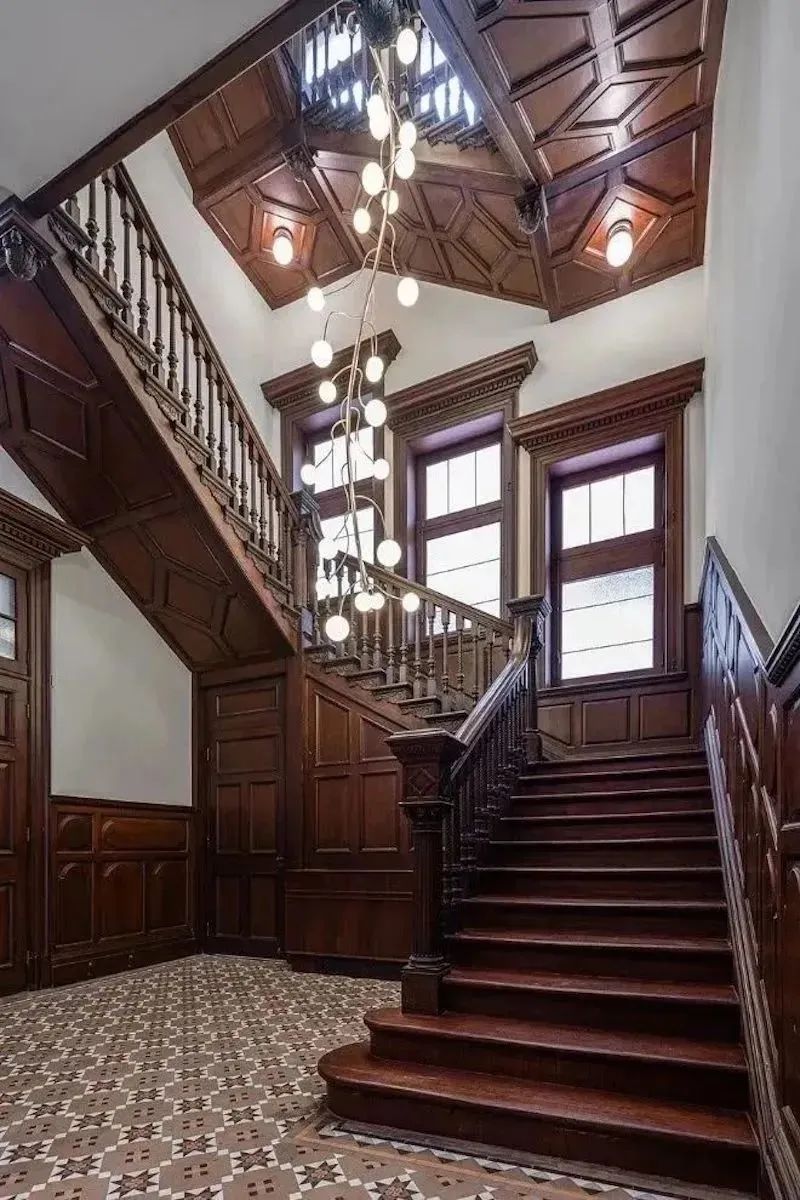
Photo: Teak stairs
In the center of the building, the teak stairs connecting the second and third floors appear spacious and grand. The stair railings are composed of beautifully carved Corinthian columns, reflecting the aesthetic preference of the house owner.
As a fine example of modern garden villas in Shanghai, the “Office Building” embodies the high level of craftsmanship at that time and has profound artistic value.
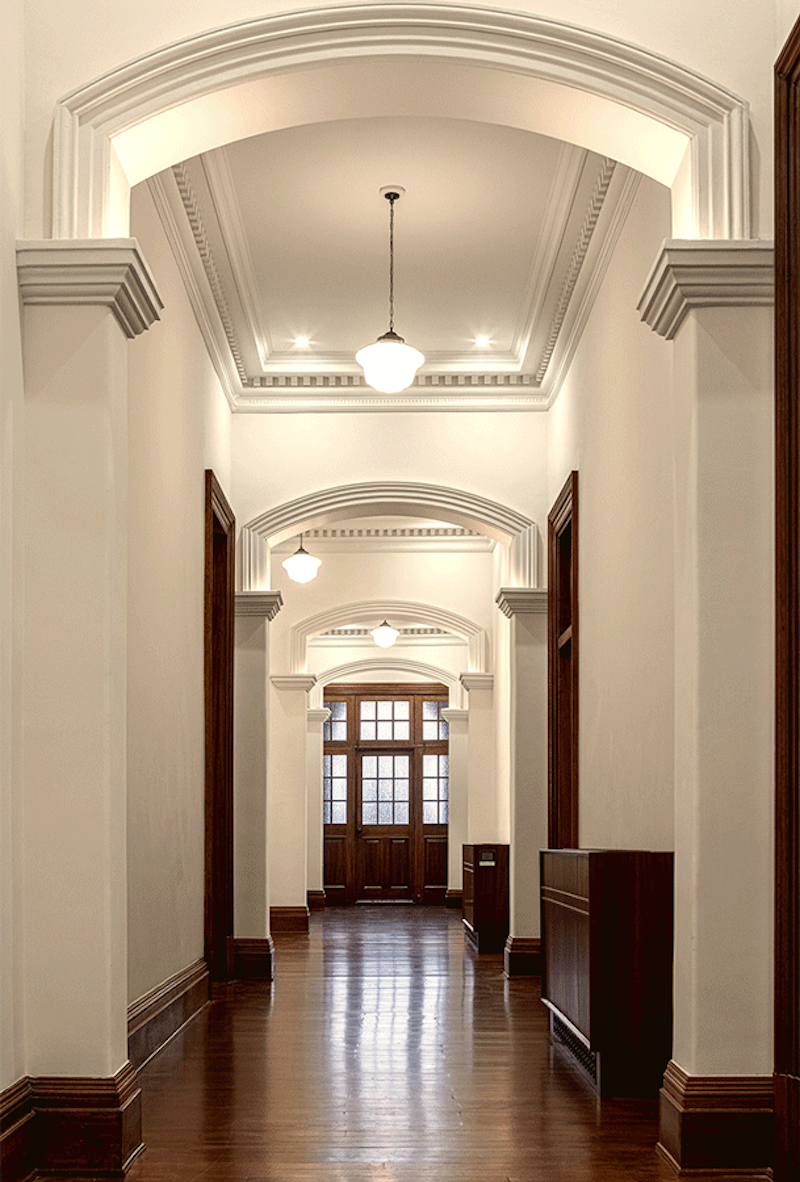
Photo: The corridor on the third floor of the main building (after the repair)
The owner of the former garden villa could no longer be found, and the lawn and garden on the south side of the estate have ceased to exist. The architecture is the only thing that remains. Over the century, the surrounding landscape has also undergone dramatic changes.
In 1995 and 1996, the Yan’an Elevated Road was built, the road was widened, and the estate boundary was forced back northward, an arrangement that almost took away the entire garden lawn. As a result, the “Office Building” became one of the closest outstanding historical buildings to the Yan’an Elevated Road.
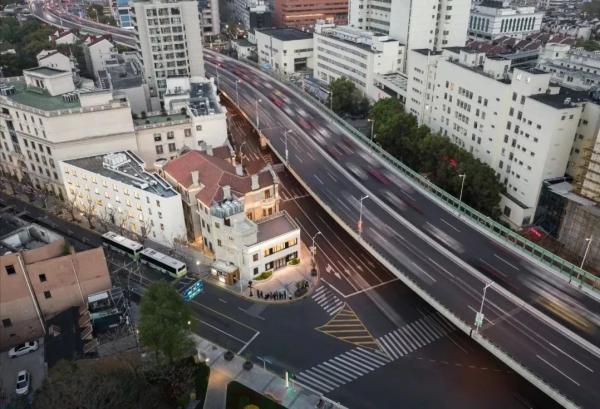
Photo: Overlooking the Yan’an Elevated Road
The protection and repairs project has carefully restored the external facade, roof, and key interior space of the building, and added electromechanical equipment in a concealed manner through subtle integration with indoor features. Meanwhile, the surrounding environment and attached architecture have also been renovated, so that the building can not only fully showcase its historical magnificence for more years to come, but also achieve revitalization, renewal, and reasonable utilization. The project sets a great example for the protection and sustainable use of historical buildings.
(Sources of some pictures and materials: China Welfare Institute, Shanghai Municipal Administration of Culture and Tourism, Shanghai Municipal Administration of Cultural Heritage, Shanghai Association of Cultural Relics Protection Engineering Industry)